

Plenty of photonics news this week as we continue to push optics in datacenters. Plus thoughts on storage, CPUs, and other strange bits and bobs.
Here’s what you might have missed this week:
Now, on to the news.
Credo agrees to acquire Dust Photonics
This is perhaps the biggest piece of news this week with many substacks covering it. We won’t get into the depths of the deal because a simple search will uncover a wealth of takes which you can read. I’ll only touch on a few important points here.
Dust Photonics provides photonic ICs which integrates nicely into Credo’s SerDes experience making them a full-stack interconnect provider — from active electrical cables, pluggable optics, microLED cables, and now integrated photonics. This latest acquisition makes Credo an interconnect powerhouse in the AI era.
I’ve also maintained that Credo’s “zero-flap” metrology for link health is one of their biggest strengths, and is a software layer that really makes the interconnect layer work at scale. You’ll also notice that Marvell has a lot of parallels in the interconnect space here; SerDes expertise, optical DSP, photonics, and telemetry systems. Credo is a smaller player, and gives the big dog (MRVL) a run for its money.
I really like Gavin Baker’s (who runs Atreides Management, an investor in Dust Photonics) explanation of the acquisition in his tweet which you should read in its entirety.

The most important take-aways from what Gavin said is that copper and optics is not a zero-sum game. Copper will remain relevant well into the 2030s, and optics will play an increasing role in datacenters. He identifies scale-up as the area for most networking growth (note that it need not be optical), followed by scale-across (this was surprising to me), and finally scale-out (which might involve CPO at some point). All this while laser shortage is getting worse!
He calls out that Credo’s Hyperlume acquisition was a smart bet, and that there is a lot of positive feedback about MicroLEDs as viable interconnect tech. We’ve started covering microLEDs on this newsletter (free post below). Also, the upcoming Semi Doped episode has a longer discussion on the Credo acquisition. Stay tuned!

(via Credo)
Thoughts on the CPU Shortage
We’ve covered the need for CPUs in agentic AI in quite some depth, and the article below has been the most popular, highest earning article YTD. We called out early that CPU:GPU ratios are going to go to one, or higher.


Since the two months that the article was published, the CPU shortage has gotten worse — to the point that cloud service providers that have nothing to do with AI inference are falling short of CPUs. The x86 vs ARM argument does not really even matter anymore. CSPs and hyperscalers will take anything they can lay their hands on, and port over software if they have to.


The situation is dire enough that the winner in CPUs is anyone who will execute on the manufacturing side and provide sufficient CPU supply. Things like core count vs IPC, or reasoning vs action workloads, or what CPU is best suited for an end application is all moot now. Sadly, most of the supply chain squeeze for CPUs also depends on what TSMC can deliver, and their ~$60B 2026 capex spend has been argued to still be too conservative for the number of chips we need. The ace in the hole would be if Intel can deliver server CPUs at scale purely on 18A.
Nuvacore: Engineered for Altitude
Speaking of CPUs, Nuvacore is a new CPU company funded by Sequoia capital, with the promise below:
A general-purpose CPU core designed to excel everywhere—from core infrastructure to advanced AI systems, including the continuous demands of agentic computing.
This is not iteration, it is a complete rewrite of the rules of silicon.
The brains behind this operation are Gerard Williams, John Bruno, and Ram Srinivasan, whom you may know from Nuvia - a company Qualcomm bought in 2021 and used their IP for their Oryon series of desktop ARM processors. The ARM licensing agreement used in this product was a matter of big contention, which was hotly contested in courts. All three founders left Qualcomm earlier this year, and Nuvacore was born.
Here is what is exciting about this news: Nuvacore promises to rethink how CPUs are built for everything including the agentic AI era. While an earlier post on this newsletter discussed the “most desirable” features of an agentic CPU across 9 different metrics, it is interesting what these CPU legends think is important for AI. More cores? More performance per core? Special architectural decisions? We have to wait and see.
(via nuvacore.ai)
NAND Shortage is Real; Phison fires warning shot
Digitimes reports that Phison CEO, Pua Khein-Seng, warned that NAND flash shortage is going to significantly worsen towards the end of 2026. It has led the company to break its 26 year old tradition of “no-debt” by fundraising a total of $1.4B for 2026. Supply tightness is expected to extend well into 2028, possibly beyond.
Note that Kioxia recently ended the production of older SLC and MLC NAND to prioritize higher margin TLC and QLC NAND SSDs for AI applications. I’ve had multiple discussions with professional investors this week about NAND, and I’ll be digging deeper into the demand for NAND in a future newsletter article. If you need a refresher, check out an older post.

(via digitimes)
Largan won’t make camera lenses for Apple, becomes CPO pilled
I like it when strange things happen — things outside the norm. In what sounds like a little guy finally standing up to the big bully, Largan Precision has said that it won’t increase order volume for the Apple iPhone 18 Pro, instead choosing to focus on optics for CPO.
Largan is a major provider of optics to Apple, but the recent move against Apple indicates an aggressive business pivot from a high volume, low margin smartphone business to high margin, potentially hyper-growth AI optics sector.
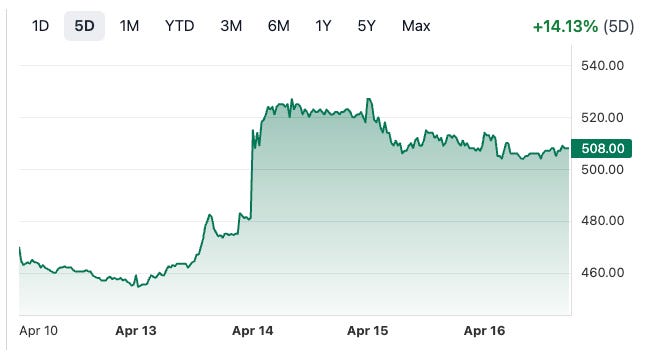
It’s a high risk gamble especially since Apple is buying up all the DRAM available at elevated prices to lock others out of the Android market. This shows that Apple is pretty confident that the memory prices are not going to affect their smartphone sales. Yet, Largan is willing to walk away, leaving the pieces to be picked up by competitors such as Sunny Optical (2382.HK) and Genius Electronic Optical (GSEO/TPE:3406). Incidentally, GSEO got a nice stock price bump right after the news of the rebuke broke. Not entirely sure if these companies can fill Largan shoes for iPhone orders.
(via wccftech)